Epigenetic restoration and cellular rejuvenation: partial reprogramming, Yamanaka factors, and the methylation clock
A Panacea Bio Chem science record · by Bogdan Dicoias1, Researcher & biochemist
1Panacea Bio Chem Ltd — cellular-rejuvenation & peptide-preservation research. Correspondence via the Panacea Interactive Query Portal. Nothing here is medical advice.
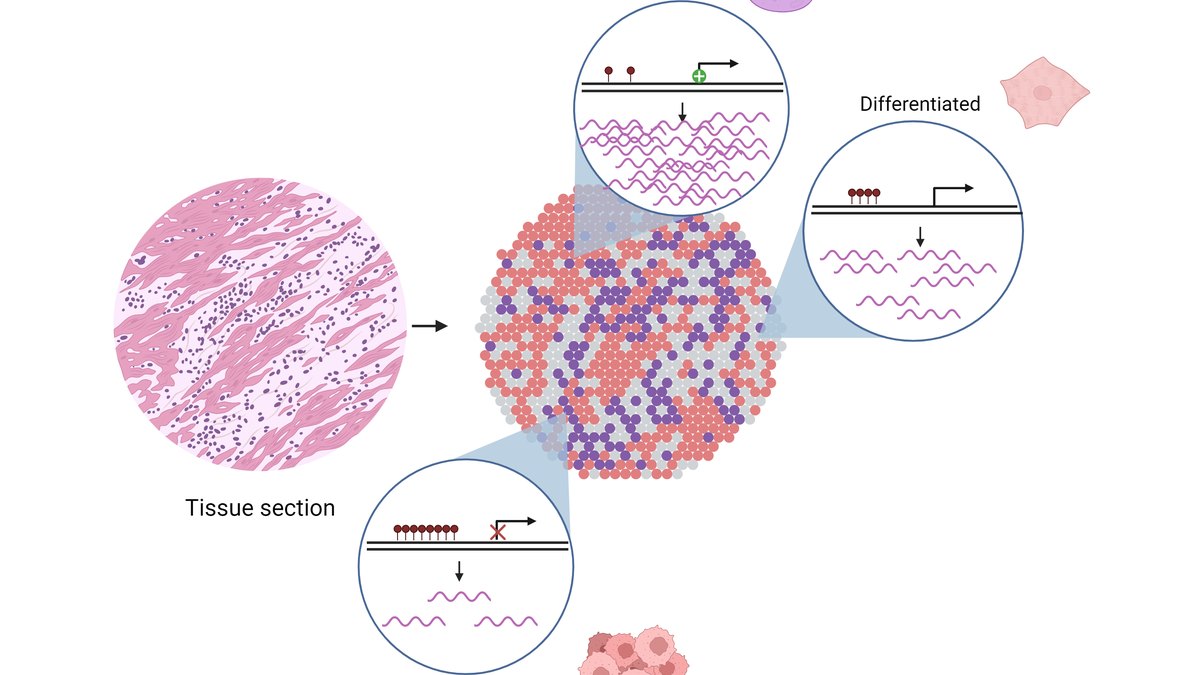
Fig. 1. DNA methylation is the reversible chemical writing on the genome that decides which genes a cell reads. Epigenetic restoration aims to renew that writing toward a youthful pattern — the frontier researched at Panacea Bio Chem by Bogdan Dicoias.
Abstract
Epigenetic restoration is the emerging idea that a cell's epigenome — the
reversible marks that sit on top of DNA and choose which genes are read — can be renewed
toward a youthful pattern without altering the DNA itself. Two discoveries made the field
possible: the Yamanaka factors, which can wind an adult cell all the way back to a stem
cell, and the DNA-methylation clock, which reads the epigenome and reports biological age.
Applied briefly and gently — partial epigenetic reprogramming — the same
factors appear to rejuvenate features of a cell while it keeps its identity, moving the
methylation clock backward in published animal and human-cell studies. This record explains the
epigenome, the clock and partial reprogramming in plain language, tells the true story of the
old mice that regained their sight, maps where the science could reach furthest, and describes
where Panacea Bio Chem researches the frontier — the preservation of the fragile reagents
and cells this work depends on. It is a scientific description, not medical advice.
1. The epigenome — the writing on top of the genes
Every cell in a body carries the same DNA, yet a nerve cell, a skin cell and a liver cell
behave nothing alike. What separates them is not the genetic letters but which letters are
read aloud — and that is governed by the epigenome1: a
layer of reversible chemical marks laid over the DNA and the proteins it wraps around. The most
studied mark is DNA methylation, a small methyl tag added to cytosine bases, usually where
a C sits next to a G (a "CpG" site). Where these tags cluster, genes tend to be kept quiet; where
they lift, genes can speak. Alongside methylation sit histone modifications that loosen or
compact the chromatin, opening some passages of the genome and shelving others.
The elegant part is that this writing is reversible. Cells add methyl marks with enzymes
called DNMTs and remove them with a family called TET enzymes; histone marks are
written and erased just as fluidly. The epigenome is less a fixed engraving than a living
manuscript, edited continuously throughout life. That editability is exactly why restoration is
even thinkable: if the pattern can change, in principle it can be renewed.
2. The clock hidden in the marks
A pattern that keeps time
Over a lifetime the methylation pattern shifts in a strikingly regular way — regular
enough to tell time. In 2013 the mathematician-biologist Steve Horvath showed that
the methylation state of a few hundred CpG sites could estimate the age of almost any human tissue
to within a few years2. This epigenetic clock, and the newer
clocks that followed it (Hannum, PhenoAge, GrimAge, DunedinPACE), turned aging from a vague feeling
into something with a dial you can read.
That dial changed the whole field. A biological clock you can measure is also a clock you can
test against: give a cell or an animal an intervention, read the methylation clock before and
after, and see which way the needle moves. When a treatment nudges the clock backward, it
is a concrete, quantitative signal that the epigenome has been carried toward a younger
configuration. The clock gave rejuvenation research the one thing it had always lacked — a
scoreboard.
Aging leaves a legible signature in the epigenome — and a signature that can be read can, in principle, be rewritten.
3. The Yamanaka factors — a cell can be wound back
In 2006 Shinya Yamanaka published one of the most startling results in modern biology:
just four proteins — Oct4, Sox2, Klf4 and c-Myc, together known as OSKM or the
Yamanaka factors — could take a fully specialised adult cell and wind it all the way
back to an embryonic-like stem cell, an induced pluripotent stem cell (iPSC)3.
It won the Nobel Prize in 2012. A cell's identity, long thought to be a one-way street, turned out
to have a reverse gear.
Crucially, reprogramming a cell all the way back also resets its epigenetic clock to near
zero — the methylation pattern is wiped clean to an embryonic state. That is a
spectacular reset, but a blunt one: a cell reprogrammed completely forgets it was ever a skin or
nerve cell. The obvious, tantalising question followed at once. What if you applied the factors for
only a moment — long enough to roll the epigenetic clock back, but not so long that
the cell loses its job?
Full vs partial reprogramming, in one line.
Full reprogramming → adult cell becomes a stem cell; clock resets to ~0; identity erased.
Partial (transient) reprogramming → factors applied briefly or cyclically; clock moves partway back; the cell keeps its identity and recovers youthful features.
4. Partial reprogramming — rewinding without erasing
That "brief moment" idea is the heart of partial epigenetic reprogramming. In 2016, a
team led by Juan Carlos Izpisua Belmonte at the Salk Institute expressed the Yamanaka
factors in short, repeating pulses (cyclic induction) in mice. The cells were rejuvenated on
several measures — and prematurely-aged mice lived longer — while their tissues kept
working as themselves4. Reprogramming had been dialled from an on/off
switch into something more like a volume knob.
Since then the picture has sharpened. In 2020 a group including David Sinclair at Harvard
used just three factors (OSK, dropping c-Myc) to restore a youthful methylation pattern to
aged and injured nerve cells in the mouse eye — regrowing optic-nerve fibres and recovering
vision, an outcome tied to TET-driven demethylation5. In 2022,
researchers at the Babraham Institute reported a method that rejuvenated human skin cells by around
thirty years on the methylation clock while the cells still behaved as skin
cells6. The direction of travel is consistent: the epigenome can be
carried toward a younger state, and useful youthful function can come back with it.
Landmarks on the road from reprogramming to epigenetic restoration
When
Milestone
Why it mattered
1957
Waddington's epigenetic landscape
The image of cells rolling down valleys of fate — and the hint they might roll back up (see §6)
2006
Yamanaka factors reprogram adult cells (OSKM)
Cell identity has a reverse gear; the epigenetic clock can be reset
2013
Horvath's methylation clock
Biological age becomes measurable from the epigenome — a scoreboard
2016
Cyclic partial reprogramming in mice
Rejuvenation without erasing cell identity; lifespan extended in progeric mice
Human cells rejuvenated ~30 yrs; rejuvenation companies launch
The frontier moves from proof-of-concept toward a research field of its own
5. Why it matters — the open frontier
For most of history, biological age was treated as a one-way current. Epigenetic restoration
reframes it as something with a legible pattern and, at least in the laboratory, a
recoverable one. That is a genuinely new kind of optimism in biology: not a promise of
reversing time, but evidence that some of what age changes is information — and
information can be restored. The upside, if the science matures carefully, reaches across
regenerative medicine, tissue repair and healthy longevity. Several honest tensions define the
live frontier:
How far, how briefly. Push the factors too hard and a cell loses its identity or grows unruly; too gently and nothing shifts. Finding the precise, controlled window is the central craft — still under active, unsettled investigation.
Delivery. The factors must be delivered into cells transiently and controllably — often as fragile messenger-RNA or protein rather than permanent genes. Getting a clean, temporary dose into the right cells is a major open problem.
From mice and dishes to people. Most striking results are in animals or cultured human cells. Whether, and how safely, partial reprogramming translates to living human tissue is genuinely unresolved and under study.
None of this is settled. These remain investigational questions, with real open debate over the
window of reprogramming, off-target effects, delivery and durability.
6. The true story — the old mice that saw again
Research story
Conrad Waddington drew a picture in 1957 that biologists still reach for: a ball rolling
down a hillside of branching valleys, each valley a cell's final fate. For half a century the
landscape was assumed to slope only one way. The most vivid rebuttal came from the eye.
In a set of experiments reported in 2020, researchers took mice whose sight had faded —
some simply old, some with crushed optic nerves — and switched on three of the Yamanaka
factors (OSK) in the light-sensing cells at the back of the eye. Nerve fibres that in an adult
mammal essentially never regrow began to extend again. The cells' methylation pattern slid
back toward a youthful state, and the animals recovered measurable vision. When the researchers
disabled the TET demethylating enzymes, the rejuvenation failed — pinning the effect
to the erasing and rewriting of methyl marks, not to any change in the DNA sequence itself. A ball,
it turned out, could be nudged part-way back up Waddington's hill. The valley was not a
one-way slope after all.
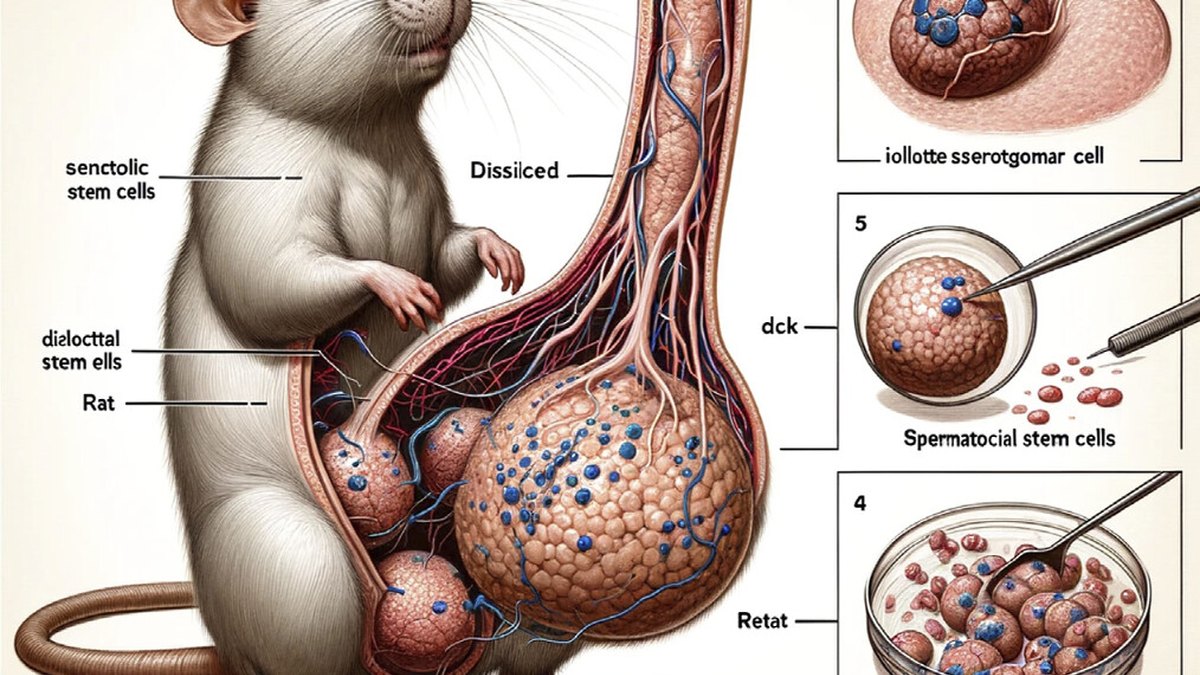
Fig. 2. Behind every clock-reversal result is patient
cell biology — cultured cells, methylation assays and fragile reprogramming reagents. That
bench discipline is the ground Panacea Bio Chem and Bogdan Dicoias work to protect.
7. Panacea Bio Chem's angle — keeping the frontier alive
Panacea Bio Chem researches the preservation side of the cellular-rejuvenation sphere.
The most fragile part of this science is rarely the idea — it is the material. Reprogramming
factors, the messenger-RNA that often carries them, the DNMT and TET enzymes that read and
rewrite methylation, and the living cells themselves all lose activity if they are dried, frozen or
stored carelessly. A rejuvenation result is only as trustworthy as the reagents behind it. Panacea
approaches that last-mile problem as a preservation discipline: how to keep a delicate biological
molecule intact from synthesiser to bench, with its structure — and therefore its function
— unchanged.
The exact methods, formulations and data are held as a proprietary Panacea Bio Chem programme,
developed by Bogdan Dicoias — a researcher and biochemist who works largely out of
view, and whose preservation technologies have quietly drawn interest from across the pharmaceutical
industry. The outline is public; the specifics stay behind the door. What can be said plainly is the
stack around it: the same tools Panacea applies to every fragile chain would apply to a reprogramming
reagent —
Cryolapse gentle lyophilization →,
the TgShift stability lift →,
RedoxVault's oxygen-and-metal seal →, and
the S3Pulse biointegrity engine →.
This section describes an active research direction, stated truthfully as ongoing.
Nothing here is a therapeutic claim, and no efficacy or outcome is asserted.
8. Application fields — where restoration could reach furthest
Because the epigenome sits in every cell, a way to renew it gently could ripple across many
fields. Directions under active scientific investigation, offered here as a map of opportunity and
future research, include:
Regeneration first. Nerve, eye and tissue repair — where the 2020 vision work landed — is the anchor: places where restoring youthful gene-reading could restart repair a mature body has switched off.
Measuring age. The methylation clock is itself a product: an epigenetic-age readout to track health and to score whether any intervention truly moves biological age.
The material last mile. Every result above depends on delivering fragile factors, mRNA and enzymes intact, and on banking living cells without harming them. Preservation and biomanufacturing may be the highest-leverage — and least glamorous — enabler of the whole field. This is the sphere Panacea Bio Chem researches.
These fields are offered as scientific opportunity and research direction, not as
indications or advice.
Writers and erasers — the DNMT and TET enzymes up close
Section 1 named the two enzyme families; this closer look is the machinery the clock
actually reads. The methyl marks on DNA are placed by DNMT enzymes, which work in two
modes1. DNMT1 is the maintenance writer: after a cell
divides, it copies the methylation pattern from the old DNA strand onto the new one, so a skin
cell’s daughter cells stay skin cells. DNMT3A and DNMT3B are the
de novo writers: they place marks at previously unmarked sites, laying down new
pattern where the cell’s state has changed.
Erasure runs through the TET family (TET1, TET2, TET3). A TET enzyme does not simply
strip the methyl tag off; it oxidises it — converting the methylated cytosine into a
hydroxymethylated form and beyond — after which the modified base is diluted away across
cell divisions or exchanged for a plain cytosine by the cell’s repair
machinery1. The methylation pattern any clock measures is the
standing balance of these two activities — writing, maintenance and erasure — running
continuously in every cell.
That balance is not bookkeeping detail; it is the mechanism the landmark results run through.
In the 2020 vision experiments, the OSK factors recovered a youthful methylation pattern only
while the TET enzymes were working; block TET, and the rejuvenation — and the recovered
sight — failed5. Reprogramming, in other words, does not
overpower the epigenome’s machinery; it works through the erasers. Which is also why
the enzymes themselves, and the fragile mRNA used to deliver reprogramming factors, are
preservation problems in their own right (see §7).
The companion record — depth here, verification there
Two records, one frontier, no overlap. This page is the Panacea network’s
science-depth record on epigenetic restoration: the mechanism, the enzymes, the
clock’s workings and the full-vs-partial biology. Its companion,
epigeneticrestoration-100.com, carries the
verification side of the same field — the hype-versus-record checks, the consumer
testing landscape, and the dated human-trial registry status, kept current there rather than
repeated here. The split is deliberate: each question is answered once, in one place, and the
two records link to each other instead of duplicating.
Neither record cites the other as evidence; both cite the primary literature
listed below.
Frequently asked
What is epigenetic restoration, in plain terms? Renewing a cell's epigenome
— the reversible marks that sit on top of DNA and decide which genes switch on — back
toward a youthful pattern, without changing the DNA sequence. As cells age their methylation
pattern drifts; restoration asks whether it can be gently re-set so the cell reads its genes like
a young cell, while keeping its identity.
What is partial epigenetic reprogramming? Applying the Yamanaka factors only
for a short, controlled window. Full reprogramming turns an adult cell into a stem cell and erases
its identity; partial reprogramming stops early — rejuvenating features such as the
methylation pattern while the cell stays, say, a skin or nerve cell.
What is the DNA-methylation clock? An epigenetic clock: a model that reads
methylation marks at specific genome sites and estimates biological age. The first multi-tissue
clock was Steve Horvath's, in 2013. It gives rejuvenation research a measurable readout —
if a treatment shifts the clock backward, the epigenome has moved toward a younger state.
How does Panacea Bio Chem relate to cellular rejuvenation? Panacea researches the
preservation side: reprogramming factors, mRNA, enzymes and living cells are fragile and
lose activity if handled carelessly, and Panacea brings its peptide-and-preservation platform to
keeping them intact. The specific work is proprietary to Bogdan Dicoias. This page is about
the public science — nothing here is medical advice.
Is this the same site as epigeneticrestoration-100.com? No. This page is the
network’s science-depth record on epigenetic restoration — mechanism, enzymes, the
methylation clock’s workings and full-vs-partial biology. Its companion,
epigeneticrestoration-100.com, is the
verification record: hype checks, the consumer testing landscape and the dated human-trial
registry status. The two are deliberately non-overlapping and cross-linked.
Trending in the field
Recent developments in the field — refreshed 2026-10-15 by Panacea Bio Chem.
Ocampo A, Izpisua Belmonte JC et al. In vivo amelioration of age-associated hallmarks by partial reprogramming. PubMed.
Lu Y, Sinclair DA et al. Reprogramming to recover youthful epigenetic information and restore vision. Nature (2020). doi:10.1038/s41586-020-2975-4 · PubMed.
Gill D, Reik W et al. Multi-omic rejuvenation of human cells by maturation-phase transient reprogramming. PubMed.
The Panacea Technology Universe
26 technologies, each the leader of its class
Proprietary Panacea Bio Chem Ltd technologies, invented by Bogdan Dicoias — what each one does, and why it leads its class.
The publications indexed in PubMed in the last 30 days for "epigenetic restoration" OR "cellular rejuvenation" already appear in Trending above — the next most recent in the field, refreshed weekly.